
Your team has probably already run the usual play. Search operators. Spreadsheet exports. A batch of outreach emails that looked decent in draft and weak in the inbox. Then the same problems show up. Half the pages are abandoned, the other half aren't really resource pages, and the replies you do get go nowhere.
That's why resource page link building still matters. Not because it's flashy, but because it can be systemized. When the page is relevant, curated, and maintained, you're not begging for a random backlink. You're pitching a useful addition to an existing hub that already exists to send readers elsewhere.
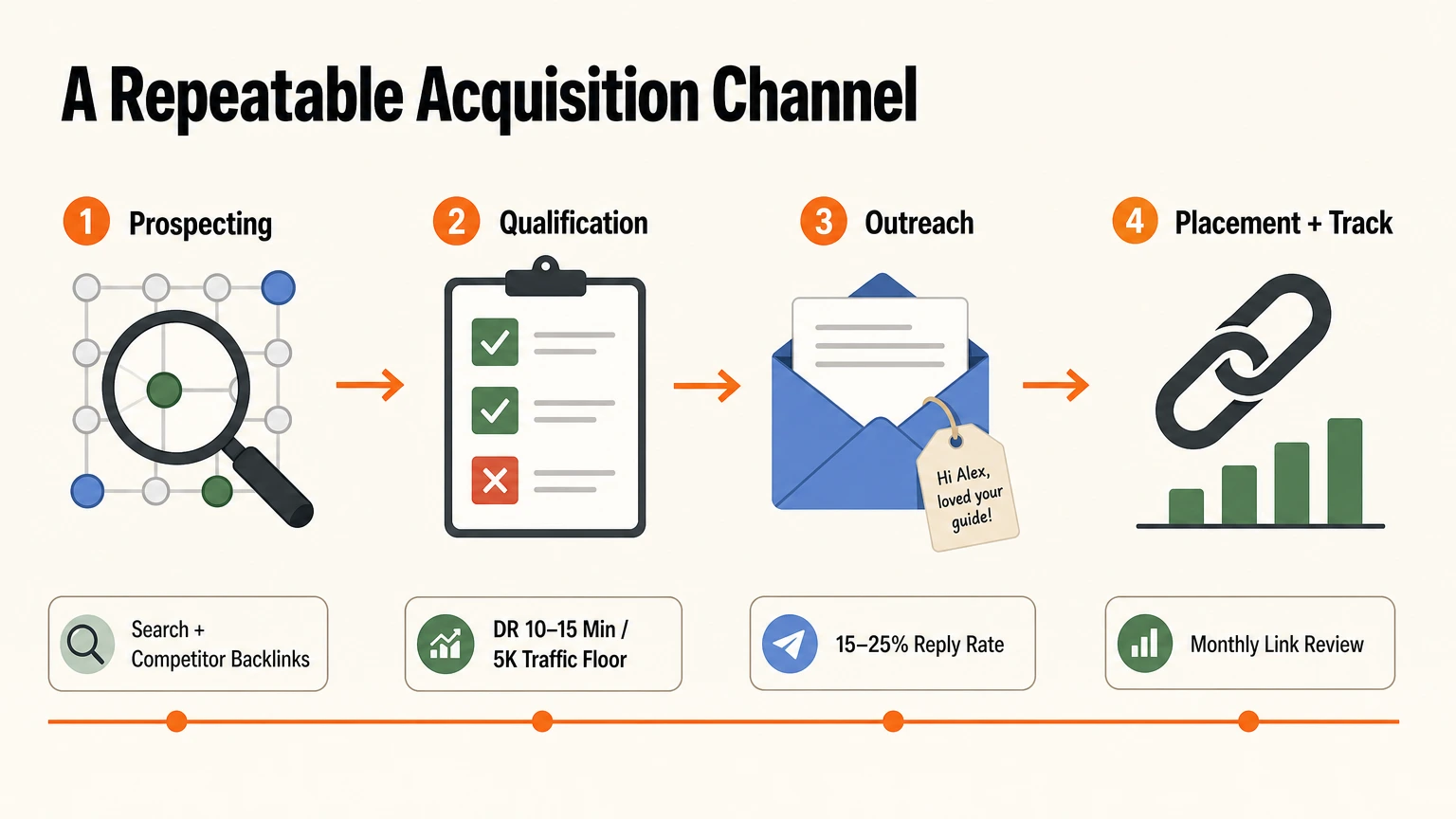
Agencies and in-house teams win with this tactic when they stop treating it like manual scavenger hunting. The substantial benefit comes from building a repeatable workflow for prospecting, qualification, outreach, and post-placement tracking. That's where the tactic stops being a one-off SEO chore and starts acting like an acquisition channel.
Why Resource Pages Are Still a Goldmine for Links
The SEO world is crowded with louder tactics. Digital PR gets the headlines. AI-assisted outreach gets the demos. Resource page link building keeps working because it solves a simpler problem. Site owners need useful links for their readers, and strong content gives them something worth adding.
That makes these pages different from many low-intent link opportunities. A real resource page usually has editorial logic behind it. Someone grouped tools, guides, organizations, templates, or educational content because the page serves a clear audience need. If your page properly belongs there, the placement feels natural.
Industry polling shows 56% of SEO professionals recommend resource link building as an effective tactic, according to Sure Oak's link building statistics roundup. That matters because it positions the tactic as a mainstream workflow, not an old SEO relic.
What makes the link valuable
A good resource page link does more than add another referring domain to a report. It can send qualified referral traffic, strengthen topical alignment, and place your brand beside other trusted references in the niche.
Three traits matter most:
Topical fit: The page topic and your asset need to match cleanly.
Editorial curation: The page should feel maintained, not dumped full of outbound links.
Audience intent: Visitors should plausibly click through because your asset solves the same problem the page addresses.
A cybersecurity checklist on a startup resource hub makes sense. The same checklist on a generic “best websites” page usually doesn't.
Practical rule: If you can't explain in one sentence why a human editor would add your page for readers, it's probably not a strong resource page opportunity.
Why this tactic survives algorithm churn
Resource pages sit in a durable middle ground. They aren't as passive as hoping journalists find your content, and they aren't as fragile as tactics that depend on loopholes. You're still earning a contextual placement from a page designed to reference outside sources.
That also makes them easier to operationalize. You can define what qualifies, train a team on the review process, build outreach around page-specific context, and measure outcomes without guessing. For teams under pressure to produce links consistently, that predictability matters more than trendiness.
The teams getting the best results usually don't chase every “resources” footprint they find. They focus on pages that already show signs of care. That means narrower lists, better pitches, and fewer wasted touches.
Your Playbook for Finding High-Value Prospects
Most prospecting falls apart at the very first step. Teams look for pages with obvious footprints, export whatever they find, and call it a list. That creates volume, not opportunity.
The better approach is layered discovery. Start with search, expand with competitor mining, then consolidate everything into a prospect database you can work from.
Start with search patterns that reveal editorial intent
Basic operators still work, but only if you combine them with qualifiers that narrow for relevance. Instead of searching your keyword plus “resources,” build strings that surface actual curation.
Examples:
Keyword plus resource terms:
"fintech" intitle:resourcesAudience-driven combinations:
"project management" ("useful links" OR "recommended tools")Institutional footprints:
"mental health" inurl:linksExclusion-heavy queries:
"email security" intitle:resources -jobs -courses -events
Then build variants around how real sites label these pages. Some use “helpful links.” Others use “partners,” “recommended reading,” “toolkit,” or “organizations.” A lot of valuable pages never use the word “resources” at all.
Mine competitor backlinks for proven patterns
If a competitor already has links from curated hubs, don't reinvent the process. Reverse engineer it.
Export their backlinks, isolate pages with resource-style footprints, and sort by topical match first. Many teams become complacent at this stage. They look only for strong domains. You should also look for recurring page structures. If multiple competitors earn links from “industry associations,” “startup support pages,” or “recommended vendor lists,” that's a pattern worth building into your prospecting model.
For a practical framework on reverse engineering linked pages, Surnex's backlink research strategies are useful because they push you beyond a simple backlink export and into page-level link discovery.
Resource page prospecting gets faster once you stop hunting individual pages and start hunting footprints that repeat across a niche.
Build one master prospect list, not five disconnected ones
Agencies often split prospecting by client or by specialist. That creates duplicate work and conflicting outreach. Use one central system with clear fields for:
| Field | Why it matters |
|---|---|
| Domain | Prevent duplicate outreach |
| Exact page URL | Outreach should be page-specific |
| Resource type | Tools page, directory, guide, association, listicle |
| Topic cluster | Helps assign by client relevance |
| Contact owner | Needed for tailored outreach |
| Qualification status | Raw, screened, approved, rejected |
| Notes | Broken links, page sections, pitch angle |
This is also where curated databases can save time. Instead of manually discovering every opportunity from scratch, teams can shortcut the earliest phase with a vetted inventory. A searchable publisher database for outreach prospecting can help when you need to reduce research hours and move straight into evaluation.
Don't ignore adjacent formats
Some of the best “resource page” opportunities don't look traditional. They might be:
Tool roundups that compare platforms in a niche
Association pages listing approved vendors or references
Educational hubs maintained by nonprofits, universities, or communities
Link collections inside long-form guides rather than standalone resource pages
Those pages often outperform old-school “links” pages because an editor still actively cares about them.
The key isn't whether the URL says resources. The key is whether the page curates external references for a real audience.
How to Qualify Targets and Avoid Wasting Time
Prospecting produces candidates. Qualification decides whether those candidates deserve outreach hours. This is the stage that separates a disciplined campaign from a bloated one.
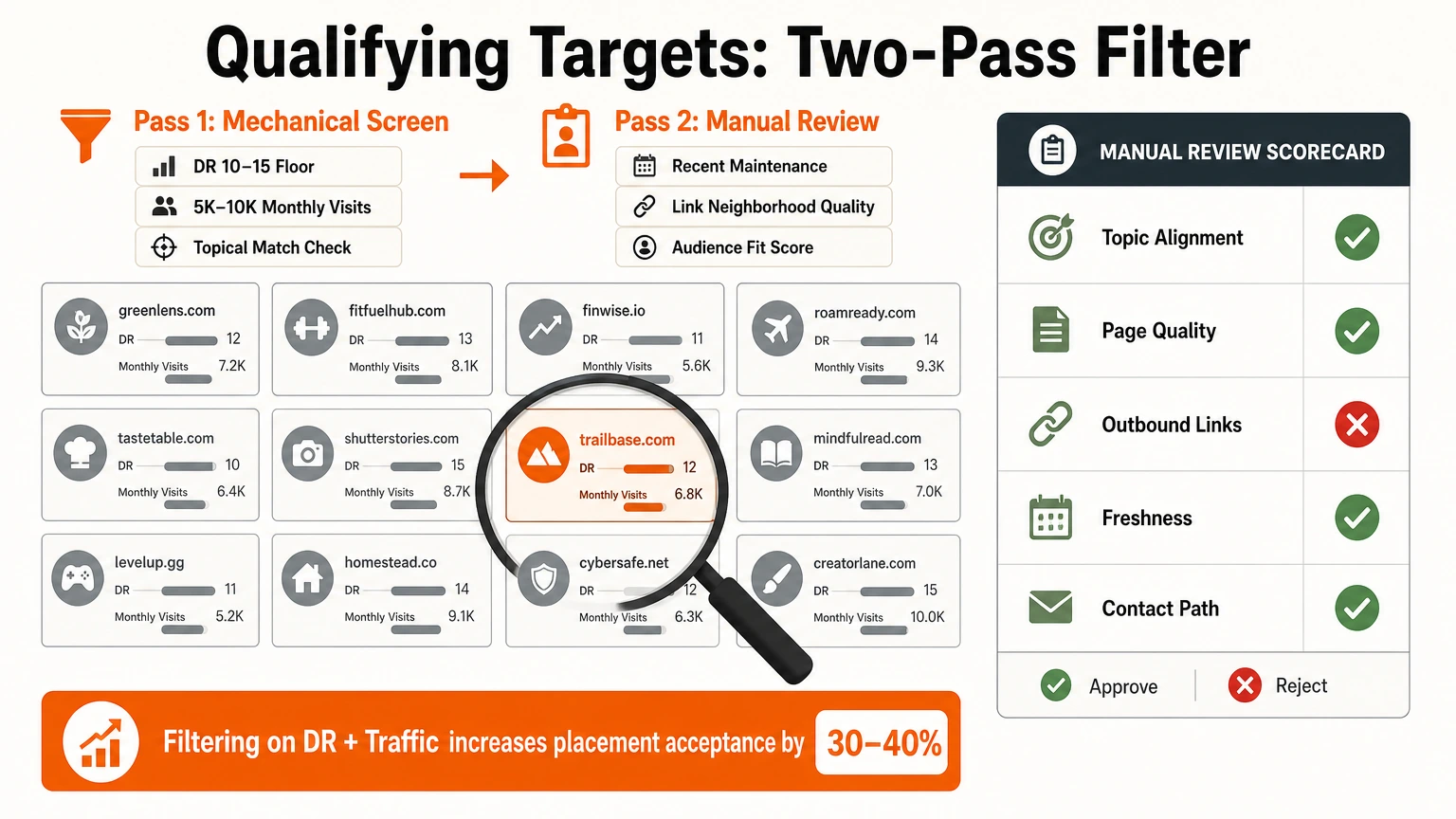
Research summarized by Dofollow's resource pages guide notes that filtering prospects on DR or DA and organic traffic, such as minimum DR 10 to 15 and 5,000 to 10,000 monthly organic visits, can increase placement acceptance by 30 to 40% compared with broad, unfiltered prospecting. The same source adds that a second manual vetting pass can reduce the risk of acquiring links from decaying pages by 25 to 50%.
Use a two-pass qualification system
The first pass is mechanical. It removes the obvious bad fits quickly.
A simple screening layer should check:
Authority floor: Skip domains that are too weak to justify effort.
Traffic floor: A page on a dead domain rarely becomes a meaningful placement.
Topical relevance: If the domain is broad, the specific page still needs niche overlap.
External linking behavior: Some pages look like resources but don't link out meaningfully.
This first screen is for elimination, not approval. A domain can pass metrics and still be a terrible target.
The manual review matters more than the metric filter
The second pass is where strong campaigns are built. Open the page and read it like an editor.
Look for signs the page is still alive:
Recent maintenance: New additions, current design, functioning links, or visible updates
Reasonable curation: Categories make sense and the list isn't overloaded
Link neighborhood quality: The page links to credible, relevant sites
Audience fit: Your content belongs naturally next to what's already there
Bad pages reveal themselves quickly. Thin copy. Irrelevant outbound links. Obvious paid placement clutter. No signs of updates. Contact details that lead nowhere. Those pages might still reply, but they usually create weak placements.
If the resource page looks like nobody has touched it in years, treat the pitch as low priority even when the domain metrics look acceptable.
A practical qualification scorecard
Don't rely on instinct alone. Use a scorecard your team can apply consistently.
| Check | Approve when | Reject when |
|---|---|---|
| Topic alignment | Clear match with your asset | Broad or unrelated theme |
| Page quality | Curated, readable, intentional | Thin, cluttered, random |
| Outbound links | Relevant and credible | Spammy, off-topic, excessive |
| Freshness | Shows signs of upkeep | Looks abandoned |
| Contact path | Real owner or editor reachable | No clear route to contact |
A junior specialist can apply this with training. A strategist should still audit edge cases, especially on higher-value prospects.
Common qualification mistakes
The biggest waste usually comes from one of these errors:
Confusing domain quality with page quality: Great domains can host weak resource pages.
Approving pages only because competitors are listed: Your competitor may have been added years ago under different standards.
Ignoring indexation and crawl issues: A live page isn't always a useful page.
Treating all resource pages as equal: An active curated tools page and a forgotten links page aren't in the same class.
Good qualification reduces not only wasted outreach but wasted reporting. A campaign looks healthier when every pitch is aimed at a target worth winning.
Crafting Outreach That Actually Gets Replies
Most outreach fails before the recipient reads the second line. The email is generic, the ask is vague, and the sender clearly didn't look at the page. Resource page outreach only works when the editor can immediately see why your suggestion belongs.
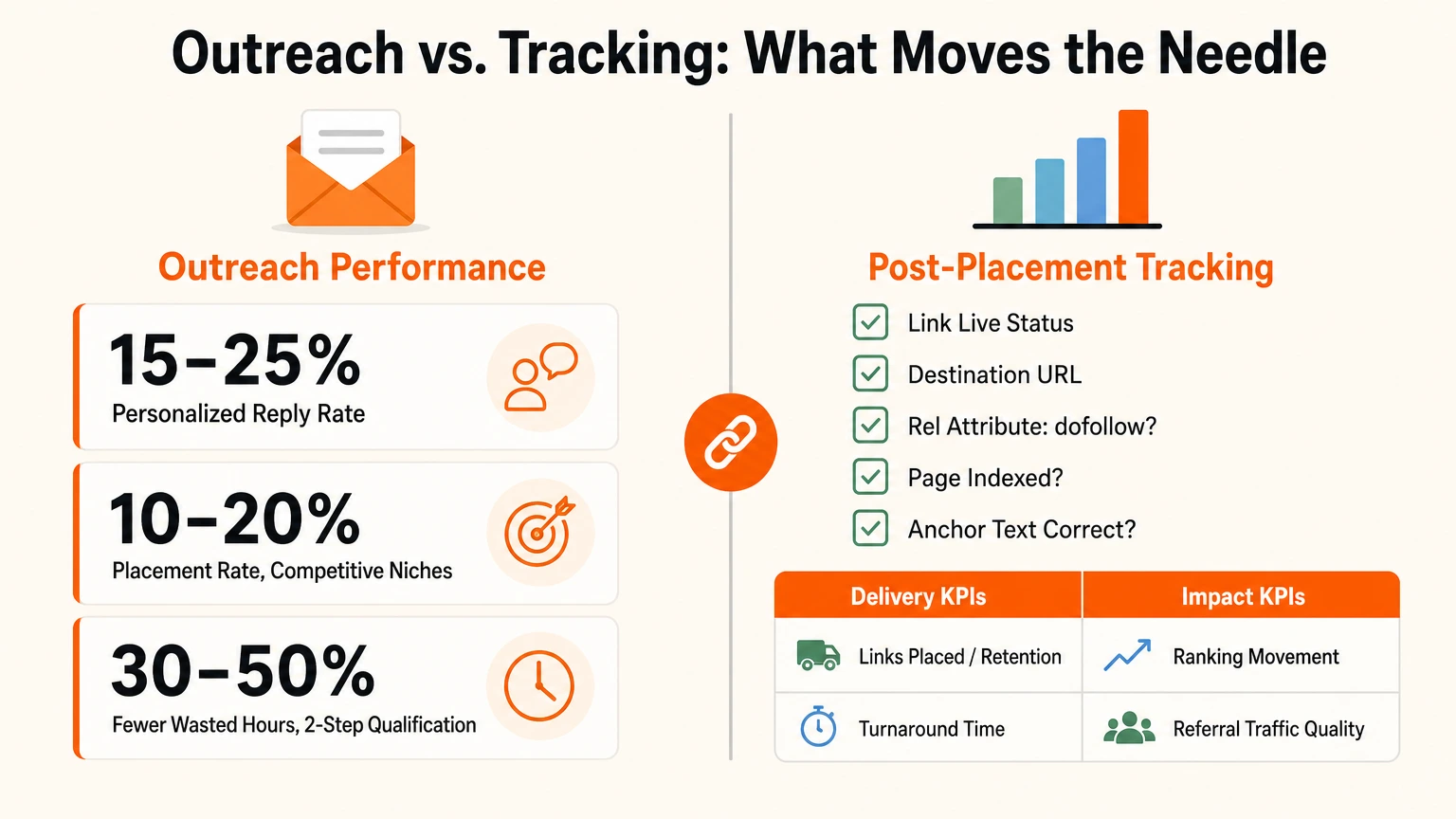
The performance gap between customized outreach and lazy outreach isn't subtle. Ahrefs' guide to resource page link building reports that personalized, context-aware emails sent to the correct content owner achieve reply rates in the 15 to 25% range and placement rates of roughly 10 to 20% in competitive niches, while a two-step qualification workflow can cut wasted outreach hours by 30 to 50%.
The pitch should improve the page
Don't write like you want a favor. Write like you noticed a specific page and have a specific suggestion.
That means your email should answer three questions fast:
Why this page?
Why this asset?
Why now?
If you can't answer all three in a few lines, the email probably isn't ready.
A strong outreach opener sounds like a human who read the page. It references the page section, category, or angle. A weak opener sounds like a mail merge with a first name token.
Three outreach angles that still work
The direct inclusion angle works when your asset clearly fits an existing section. Mention the exact section and give one reason your content helps their audience.
The broken link angle works when you found a dead external resource and have a credible replacement. Keep the focus on helping them fix the page, not on sneaking in your own URL.
The contextual upgrade angle works when the page already links to older or thinner material and your content is more complete or more current. This only works if the upgrade is obvious.
Here's a simple structure that holds up well:
Subject line: Reference the page or topic directly
Opening line: Show you reviewed the page
Body: Explain the fit in one short paragraph
Ask: Suggest the exact placement or section
Close: Make the reply easy
For teams trying to improve contact accuracy before they even send the pitch, guides on effective business email acquisition are useful because they help you avoid the classic mistake of emailing a generic inbox instead of the person who owns the page.
A lot of outreach failures are contact failures disguised as copy failures.
Keep templates flexible, not robotic
Templates are useful for structure, not language. The moment every email sounds the same, you lose.
Good templates standardize:
the order of information
the length
the call to action
the follow-up logic
They should not standardize the actual page reference or the reason for inclusion. That part has to change.
Here's a practical benchmark for quality control. If a prospect could swap their site name with another and the email would still read naturally, your outreach is too generic.
This walkthrough is worth watching if you want to tighten the mechanics behind outreach messaging and workflow:
Follow-up without sounding desperate
Follow-ups are either overdone or skipped entirely. The better move is to send brief follow-ups that add context.
Examples of useful follow-up additions:
mention the exact section where the link could fit
note a broken or outdated resource on the page
clarify who the content helps
offer a shorter summary of the asset
If you need hands-on support for campaign execution, a managed blogger outreach service for link acquisition can be one route. The bigger lesson is operational, not vendor-specific. Outreach works better when targeting, ownership, and follow-up are handled by a repeatable process instead of ad hoc sending.
Short emails win when they contain one real observation the recipient couldn't mistake for automation.
Tracking Placements and Measuring Real ROI
A link isn't finished when the editor says yes. It's finished when the placement is live, crawlable, on the agreed page, and still there later.
That's the part many teams neglect. They celebrate the placement, log it in a sheet, and move on. Weeks later, the page changes, the link is removed, the rel attribute shifts, or the page drops out of indexation. If you're not monitoring, you won't know.
What to verify after placement
Every new placement should go through a post-live check. Keep it simple and consistent.
Review these items first:
Link status: Is the link live on the promised page?
Destination URL: Does it point to the correct page?
Rel attribute: Is it dofollow, nofollow, sponsored, or UGC?
Indexation status: Can search engines find the page?
Anchor text: Does the anchor reflect the intended context?
This doesn't need to be manual forever. A dedicated backlink monitoring workflow helps teams catch removals, redirects, rel changes, and indexation issues before those losses pile up.
Separate delivery metrics from business metrics
Agencies often report what's easiest to count. Placements delivered. Outreach sent. Reply volume. Those are operational metrics, not business outcomes.
Split your KPIs into two groups.
KPI typeWhat to trackDelivery KPIsLinks placed, live status, turnaround time, link retentionImpact KPIsRanking movement, referral traffic quality, assisted conversions, page-level visibility
For an agency, the delivery layer proves execution quality. For an in-house team, the impact layer matters more because leadership wants to know whether links influenced the target pages that matter.
Measure at the page cluster level
One link rarely tells the whole story. Resource page campaigns work best when tied to a page cluster or topic cluster.
If you're building links to a compliance guide, don't measure only the destination URL. Also watch the related supporting pages in the same cluster. Resource links often strengthen broader topical visibility, not just one keyword target.
Many reports gain greater credibility. Instead of claiming one link caused a ranking gain, show how a sequence of relevant placements supported visibility across a topic area over time.
Field note: The safest ROI reporting connects links to pages, pages to topic clusters, and clusters to business goals. Anything more direct usually overstates causation.
Build a retention habit
Some resource pages are maintained aggressively. That's good for quality, but it also means links can change. Editors swap resources, prune outdated references, or redesign pages.
A retention routine should include:
monthly live-link review
periodic indexation checks
notes on pages that change often
re-engagement outreach when a relevant page drops your link
That last point gets missed. If your content improved, a polite re-pitch can restore a lost placement. Post-placement management isn't busywork. It protects the effort you already paid for with research and outreach.
Scaling Your Workflow and Avoiding Pitfalls
A lot of teams say resource page link building can't scale. What they really mean is their process can't scale. They rely on individual judgment, scattered spreadsheets, and tribal knowledge stuck in one strategist's head.
That breaks once volume increases. It also gets expensive fast. Link Building HQ's statistics roundup notes that organizations allocate roughly 28 to 36% of total SEO spend to acquiring links, with in-house teams averaging about 36.03%. When that much budget sits inside link acquisition, inefficient workflows stop being a minor annoyance.
Build a role-based process
Resource page campaigns scale when each stage has an owner and a definition of done.
A practical team split looks like this:
Prospector: Finds candidates and logs raw opportunities
Qualifier: Reviews pages and approves only viable targets
Outreach specialist: Personalizes and sends email sequences
Campaign lead: Reviews outcomes, resolves edge cases, and protects quality
That setup works for agencies and internal teams because it separates repetitive work from judgment-heavy work. Junior staff can handle discovery and initial screening. Senior staff should define standards and review exceptions.
The pitfalls that create hidden waste
The biggest operational mistakes aren't dramatic. They're repetitive.
One team pitches the same domain for multiple clients. Another forgets prior conversations and burns a relationship. Someone logs “resource page” without the exact URL. A link goes live and nobody checks whether the page remains indexed. None of these errors look huge in isolation. Together, they wreck efficiency.
A shared blacklist and project-level conflict controls matter a lot in agency settings. So does a single source of truth for prospect status, ownership, and notes.
Standardize judgment, not just templates
Teams often document email templates but skip the harder part. They never document what counts as a good target, what disqualifies a page, or when a prospect should move to follow-up versus archive.
Create short internal rules for:
pages that qualify immediately
pages that need senior review
pages that are permanently blacklisted
acceptable outreach angles by resource type
conditions for reporting a placement as complete
That's how you make the workflow trainable.
The payoff isn't just speed. It's consistency. When every specialist uses the same qualification logic and the same tracking discipline, results become more predictable and mistakes get easier to catch.
If you want to run resource page link building without juggling prospect lists, outreach ops, and link monitoring across separate tools, PRWiz is worth a look. It combines a curated publisher marketplace, workflow controls for teams, and daily backlink monitoring in one place, which makes it easier to turn a messy link-building process into something repeatable.